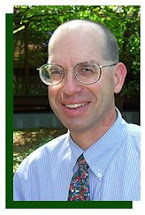
Your opinion certainly counts for the staff of the Missouri Department of Conservation. The Department of Conservation wants to hear from Missouri hunters about their opinions for deer management in Missouri. A series of 16 public meetings are being conducted to allow anyone the opportunity to provide comments. There will be two meetings in each of the Department's eight regions throughout the state.
You can read about the meetings on the Department's Web pages.
You can provide comments online if you can't attend a meeting.
You can hear about deer management efforts and why the Department wants to hear from hunters from online videos posted by Department staff on YouTube and MySpaceTV.
You can read about the meetings and efforts on the Department's blog, Fresh Afield.
You can read about the effort from an online fact sheet that includes a mailing address and comment card.
You can contact a regional office at the locations described on the Department's Web pages.
The video on YouTube:
And on MySpaceTV:
Deer Management Public Forums - 2008
Add to My Profile More Videos
Showing posts with label opinons. Show all posts
Showing posts with label opinons. Show all posts
Wednesday, January 16, 2008


Tuesday, September 11, 2007
Surveys are Useful for Fish, Forest, and Wildlife Management in Missouri
All surveys have error and some surveys are useful. A statistician I know that works for the Missouri Department of Conservation frequently reminds me that all surveys have error. And he says in the same sentence, that some surveys are useful. The key for usefulness is proper design, careful attention to details, and appropriate analysis and reporting. Proper design and implementation of a survey reduce the level of error so the survey information is useful.
Managing by facts. The reason surveys need to be useful, and we want to eliminate error, is to have information to guide conservation decisions. The words "using the best scientific information" are used in several of the "Results we want to achieve" statements of the Department of Conservation's strategic plan, in addition to "increased availability and use of conservation-related information."
Over seven decades of best-in-class work. The staff in the Missouri of Department of Conservation started on a journey of best-in-class research and science soon after the Department was established in 1936. That research and information gathering continues today to produce accountable information that can be used for conservation decisions.
The human dimensions of conservation. In the 1970s, Department of Conservation staff began to use surveys and other public input methods very frequently to learn about the expectations, participation levels, and satisfaction of Missourians for fish, forest, and wildlife activities. These "human dimensions" of management are now included in almost every aspect of conservation work.
You can read more about how the human dimensions of conservation has been used in decisions about fish, forests, and wildlife, in the Missouri Conservationist magazine. A recent article, "Your Opinion Counts" was in the January, 2007 issue and another article, "When Missourians Speak" was in the February, 2000 issue.
Tuesday, August 7, 2007
Human Dimensions, the Gnomon, and Indicators of Satisfaction with Conservation Performance

During late June and July, I spent two weeks at Philmont Scout Ranch in northeastern New Mexico helping with the National Advanced Youth Leadership Experience (NAYLE), a leadership training course for Scouts. In several parts of the program, the staff and participants pledge to be servant leaders with the statement that "as the sun dial measures the passage of time, so will my service be measured over time, by my impact on others."
The post on a sun dial, the part that casts a shadow, is called the gnomon. The Merriam-Webster dictionary defines the gnomon as "an object that by the position or length of its shadow serves as an indicator."
Driving home, I thought about how the human dimensions of resource management can be used like the gnomon on the sun dial, in that the attitudes and opinions of Missourians about fish, forest, and wildlife management are an indicator. We can use human dimensions information as an indicator of satisfaction with conservation performance.
In several surveys, the Department of Conservation has asked Missourians to rate the job the Department is doing to provide conservation services. In 2003, 64.1 percent of Missourians indicated, for themselves, that the Department was doing an "Excellent" or "Good" job. In addition, 26.5 percent indicated "Don't Know," 8.5 percent said "Fair," and less than one percent said "Poor."
This level of satisfaction with the Department has remained almost exactly the same over the last 10 years. I can use this human dimensions information to help Department of Conservation staff understand the level of satisfaction that Missourians have for our conservation performance. Then the information can be used to help make plans for the future.
Human dimensions information is a very useful indicator of performance, just like using the gnomon on a sun dial to measure the passage of time.
More information about the Missouri Department of Conservation's performance is available in the Department's annual reports, and you can find more information about conservation programs on the Department's Web pages.
Tuesday, June 19, 2007
Human Dimensions is Servant Leadership in Action for Conservation in Missouri
Human dimensions information for conservation is servant leadership in action. I have to recall the past to show how I believe human dimensions information for conservation is a servant leadership in action.
A decade of teaching and learning leadership skills. In 1996, I was asked to participate on the adult staff of a leadership training course for young men. While at that course, although I certainly enjoyed the experience, I would not have predicted that I would continue volunteering my vacation time for similar leadership training courses for every year since that time. This summer I will be part of the adult staff for my 10th course in Missouri. I'll also be involved in my sixth course at the national level, working with youth for an advanced experience at the Philmont Training Center in New Mexico.
Servant leadership is a concept about helping others. The training syllabus that we use has changed since 1996. In the 90s, it focused more on the rote skills of leadership, including communication, planning, conflict resolution, using resources effectively, and other skills. Today, using some of the best parts of current leadership theory and theories that have stood the test of time, the course is slightly different, with a focus more on broader concepts in addition to skills. One concept is that of servant leadership. Being a servant leader involves many things, and Larry Spears writes that the concept is "one that seeks to involve others in decision making, one strongly based in ethical and caring behavior, and one that is attempting to enhance the personal growth of people while improving the caring and quality of our many institutions." At its simplest, servant leadership is about a focus on the needs of others.
The training syllabus describes the concept as: "The concept of servant leadership encourages leaders to serve others while staying focused on achieving results in line with the organization's values and integrity. Servant leadership emphasizes collaboration, trust, empathy, and the ethical use of power."
This idea of including others in decision making, using an approach that is both ethical and respectful of others point-of-view, is what using human dimensions and public involvement in conservation decision-making is all about.
Human dimensions information is used to help others. Human dimensions helps resource mangers make informed decisions about fish, forest, and wildlife conservation. In Missouri, human dimensions efforts are some of the ways citizen opinions are included in conservation decisions. Human dimensions information helps managers and decision-makers provide conservation programs and services that meet the needs and expectations of Missourians. That is why I believe that human dimensions is servant leadership in action.
"What We Believe" statements of the Missouri Department of Conservation guide actions. Using human dimensions information helps me and the staff of the Missouri Department of Conservation demonstrate our "What We Believe" statements. The second statement is "All citizens are important; we value their trust and their point of view" and the third is "Missourians are our partners to achieve conservation success." The last statement includes: "Our decisions and behavior will be based on fairness, objectivity and the best scientific information."
Excellent public service is what we will provide. I believe that using human dimensions information for conservation decision-making helps achieve the first "What We Believe" statement "Excellent public service is what we will provide." These words in the "What We Believe" statements are very similar to the words I use each summer when teaching about the concept of servant leadership. Using human dimensions information and public involvement to meet the needs and expectations of Missourians for fish, forest, and wildlife in Missouri looks exactly like servant leadership to me.
Saturday, June 16, 2007
Human Dimensions Information for Fish, Forest, and Wildlife Conservation in Missouri
Human dimensions information is used everyday for conservation decisions. As I drove home Friday evening, thinking about the events of the week, I thought about how several of the tasks I participated in during the week demonstrate how human dimensions information and the distribution of that information are a part of the decisions that are made everyday about conservation.
1. Thirty years of human dimensions work. I was interviewed by Cindi Jacobson about the Missouri Department of Conservation's approach to use human dimensions information in fish, forest, and wildlife management efforts. Ms Jacobson is an Alaska Department of Fish and Game employee who is conducting Ph.D. research through the Human Dimensions Research Unit at Cornell University. She was in Missouri interviewing individuals at the Department of Conservation. She is also interviewing individuals in Arkansas, Maine, and New Mexico. I provided comments to her about the Department's nearly 30 years of human dimensions research and public involvement efforts. The Department of Conservation employed its first full-time social researcher in 1978.
2. Public involvement is used to find solutions and provide guidance. I reviewed materials to help in a citizen forum next week to collect solutions about a forest management issue. The Department of Conservation frequently uses public meetings, forums, and focus groups to enable citizens to provide direction for conservation issues. Examples of comments from several public forums conducted by the Department are available online.
3. Using technology to increase efficiency and reduce process time and costs. I participated in a meeting with Department staff to improve our use of SharePoint, a software collaboration tool, to make a wide variety of information easier to find, access, and use, including human dimensions and policy information.
4. Managing electronic files and information. I was interviewed by an outside consultant for a statewide effort to examine the needs of Missouri government agencies for managing and retrieving electronic files and documents. Managing the increasing number of electronic files is an important issue. From my perspective, improving the ability to find and access human dimensions reports, files, and data is very important both for my work and to increase the use of human dimensions information by Department staff, other agencies, and Missourians. Improving access to human dimensions information will make it easier for that information to be used to guide and provide accountability for conservation decisions.
5. Staying in touch with conservation opinions, satisfaction, and participation. I edited questions for a statewide survey about conservation opinions, participation, and satisfaction. This particular survey of Missourians was first conducted by the Department of Conservation in 1994 and has been repeated at regular intervals. It is an important effort to understand how Missourians feel about conservation issues.
Human dimensions information improves accountability. One of the nine goal categories of the Missouri Department of Conservation's strategic plan, The Next Generation of Conservation, is "Accounting for Department Operations." The goal statement is: "The Conservation Department will operate effectively with accountability for public funds and respect for Missouri citizens." Human dimensions information helps me and other Department staff make informed decisions. Although information can certainly increase our understanding of the complexity of issues and increase our awareness of the far-reaching consequences of decisions, sometimes information can make decisions more difficult or uncertain rather than easier. Even if a decision is difficult or the outcome uncertain, however, using information almost always makes a decision more accountable.
The desired results of the goal Accounting for Department Operations include:
I think that all five of the examples I thought about from the past week help achieve these desired results.
The entire document of The Next Generation of Conservation is available online. Individual sections are also on the Department of Conservation's Web pages. A special issue of the Missouri Conservationist magazine, in September 2006, included information and other articles related to The Next Generation of Conservation.
The most recent annual reports from the Department of Conservation are also available online and a two-page summary of the 2006 annual report is in the January issue of the Missouri Conservationist magazine.
1. Thirty years of human dimensions work. I was interviewed by Cindi Jacobson about the Missouri Department of Conservation's approach to use human dimensions information in fish, forest, and wildlife management efforts. Ms Jacobson is an Alaska Department of Fish and Game employee who is conducting Ph.D. research through the Human Dimensions Research Unit at Cornell University. She was in Missouri interviewing individuals at the Department of Conservation. She is also interviewing individuals in Arkansas, Maine, and New Mexico. I provided comments to her about the Department's nearly 30 years of human dimensions research and public involvement efforts. The Department of Conservation employed its first full-time social researcher in 1978.
2. Public involvement is used to find solutions and provide guidance. I reviewed materials to help in a citizen forum next week to collect solutions about a forest management issue. The Department of Conservation frequently uses public meetings, forums, and focus groups to enable citizens to provide direction for conservation issues. Examples of comments from several public forums conducted by the Department are available online.
3. Using technology to increase efficiency and reduce process time and costs. I participated in a meeting with Department staff to improve our use of SharePoint, a software collaboration tool, to make a wide variety of information easier to find, access, and use, including human dimensions and policy information.
4. Managing electronic files and information. I was interviewed by an outside consultant for a statewide effort to examine the needs of Missouri government agencies for managing and retrieving electronic files and documents. Managing the increasing number of electronic files is an important issue. From my perspective, improving the ability to find and access human dimensions reports, files, and data is very important both for my work and to increase the use of human dimensions information by Department staff, other agencies, and Missourians. Improving access to human dimensions information will make it easier for that information to be used to guide and provide accountability for conservation decisions.
5. Staying in touch with conservation opinions, satisfaction, and participation. I edited questions for a statewide survey about conservation opinions, participation, and satisfaction. This particular survey of Missourians was first conducted by the Department of Conservation in 1994 and has been repeated at regular intervals. It is an important effort to understand how Missourians feel about conservation issues.
Human dimensions information improves accountability. One of the nine goal categories of the Missouri Department of Conservation's strategic plan, The Next Generation of Conservation, is "Accounting for Department Operations." The goal statement is: "The Conservation Department will operate effectively with accountability for public funds and respect for Missouri citizens." Human dimensions information helps me and other Department staff make informed decisions. Although information can certainly increase our understanding of the complexity of issues and increase our awareness of the far-reaching consequences of decisions, sometimes information can make decisions more difficult or uncertain rather than easier. Even if a decision is difficult or the outcome uncertain, however, using information almost always makes a decision more accountable.
The desired results of the goal Accounting for Department Operations include:
Missouri citizens providing frequent input into Conservation Department decisions and programs.
Conservation efforts led by a highly trained, diverse, technologically skilled and professional staff.
Fair and ethical business methods that enable Missourians to see how public funds are spent on conservation priorities.
I think that all five of the examples I thought about from the past week help achieve these desired results.
The entire document of The Next Generation of Conservation is available online. Individual sections are also on the Department of Conservation's Web pages. A special issue of the Missouri Conservationist magazine, in September 2006, included information and other articles related to The Next Generation of Conservation.
The most recent annual reports from the Department of Conservation are also available online and a two-page summary of the 2006 annual report is in the January issue of the Missouri Conservationist magazine.
Thursday, June 14, 2007
Missourians Who Worry "A Fair Amount" and "A Great Deal" About Selected Conservation Issues

When asked about a variety of conservation issues, the pollution of drinking water had the highest level of personal worry by Missourians when the responses of "a fair amount" and "a great deal" are added together.
This "top two" approach provides an indication of the more strongly held opinions of Missourians about the selected conservation issues in this question.
Almost 80 percent or more of Missourians worry about drinking water pollution, pollution of rivers, streams, and lakes, and air pollution. A clear majority of Missourians worry about the loss of natural habitat for wildlife and not enough regulation for housing, business, or shopping developments. About one-half of Missourians worry about urban sprawl and a significant number of Missourians worry about channelized or altered streams.
The strongest held opinions, those that worry "a great deal," increase as the overall level of worry increases (the green shaded areas on the right in the chart) for the conservation issues in the list. For each issue, the number of Missourians that worry "a fair amount" (the areas shaded yellow on the left) is about the same.
In this chart, the overall ranking stays the same compared to the rankings obtained if only the levels of "a great deal" are compared in a chart or if the levels of all Missourians who had any inclination to worry about the issues are compared. Although I would be comfortable reporting any of the three ranking charts, the "top two" approach in the chart here provides a very clear perspective about what a majority of Missourians feel about the selected conservation issues.
Even a quick inspection of the chart indicates that the top four issues have the highest levels of worry by Missourians, including the issues of drinking water pollution, pollution of rivers, streams, and lakes, air pollution, and the loss of natural habitat for wildlife.
These results for how Missourians personally worry about conservation issues are from a conservation opinion survey conducted for the Missouri Department of Conservation by the University of Missouri in 2003. The survey was conducted by mail and a statistically valid random sample of Missouri adults from every Zip Code in Missouri were asked to provide their opinions. A total of 6,352 Missourians provided completed survey forms.
Wednesday, June 13, 2007
The Levels of Worry by Missourians for Selected Conservation Issues

Yesterday I provided a link to a report from the Brookings Institute about changes in population and where people live in Missouri and showed a chart using results from a conservation opinion survey about how Missourians worry about several conservation issues. In the chart, I included an overall total for the responses of "only a little," "a fair amount," and "a great deal."
It is often useful in survey analysis to compare the different responses to a question and look beyond the overall totals.
In the chart here, I have broken out the responses for each issue. Note in the chart that as the overall total level of worry for a specific issue increases, the number of Missourians who worried "only a little" decreases (the red shaded areas on the left) and the number that worry "a fair amount" stays about the same (the yellow shaded areas in the middle). It is the number of Missourians who worry "a great deal" that steadily increases as the overall level of worry increases (the green shaded areas on the right).
This suggests increasing awareness and concern for the conservation issues that have the highest levels of worry. Something about the issue itself has a stronger emotional meaning or seems more important. It could be that the issues that have the highest level of worry seem closer, or more personally "real" to Missourians.
Tomorrow, I'll look at just the top two responses for each conservation issue in the question. I want to see how the issues compare using the strongest levels of concern, including the responses of "a fair amount" and "a great deal," to see if this "top two" approach provides a different perspective about the level of importance of these issues to Missourians.
Thursday, May 31, 2007
New Portal for Human Dimensions in Natural Resources and Conservation
 A portal. When I was much younger I don't recall if portal was in our vocabulary.
Even now, the word portal to me suggests a way to enter something new or far away. An entryway to something different.
I'm hoping that the new portal for human dimensions information in natural resources and conservation is exactly that--an entry to something different.
The HD.gov portal will become available about the middle of June.
From the HD.gov Web page, the effort is described:
This resource will serve as a credible online information resource as well as a portal with featured service‐links to guide users to existing online information relevant to their specific information needs (e.g., online tools, publications, methods, calendar of events). This work will add value to existing agency sites by highlighting the widely applicable aspects of their content, while retaining links to their agency‐specific information.Human Dimensions leaders from several federal natural resource management agencies are launching the effort, as an interagency human dimensions Web resource.
You can tour the prototype pages and check out the pages when released later in June at: http://www.hd.gov/
Wednesday, May 30, 2007
Using Surveys for Public Involvement in Conservation

Frederick Mosteller, who applied statistics to help everyday people understand many subjects, said "It is easy to lie with statistics, but it is easier to lie without them."
Statistics from surveys are often used to provide accountability for conservation decisions related to fish, forest, and wildlife management. Opinions, interests, participation in activities, and satisfaction with performance are some of the human dimensions of conservation efforts. These human dimensions help the staff of the Missouri Department of Conservation make informed and accountable decisions.
Surveys provide a cost-effective way to learn about the conservation opinions of Missourians by asking a relatively small number of individuals to provide their opinions. For most questions, valid results can be obtained by asking about 800-1000 individuals to offer their opinions from the entire 5.8 million individuals that live in Missouri. When conducted correctly, a survey can provide results that are representative of the entire population. If we are willing to accept a slight decrease in the ability to separate overall responses for individual questions, a valid survey in Missouri could be conducted with 300-400 individuals.
Think of looking at the shoes that people wear. If you look at enough people, in enough places, you'll soon see most of the kinds of shoes that people wear, without having to look at everyone, in every place. Using the information you observe, you can soon predict the kinds of shoes people are wearing in other places.
An introduction to using surveys to collect public opinions is available at: http://www.whatisasurvey.info/
An article in the Missouri Conservationist that describes how surveys are used for conservation and fish, forest, and wildlife management is available at: http://www.mdc.mo.gov/conmag/2007/01/20.htm and a previous article is available at: http://www.mdc.mo.gov/conmag/2000/02/40.htm
Frederick Mosteller, who died in 2006, has biographical information at the American Statistical Association, available at: http://www.amstat.org/about/statisticians/index.cfm?fuseaction=biosinfo&BioID=10
If you want to become a statistician and pursue a career using statistics, an excellent source of information about what a statistician does and how to become one is available at: http://www.amstat.org/careers/index.cfm?fuseaction=main
Saturday, May 26, 2007
Human Dimensions and Decision-Making for Conservation
 Human dimensions information for fish, forest, and wildlife decision making is like the information available for a pilot in the instruments of an airplane or the notes on a page for a musician.
Human dimensions information involves the social and economic aspects of fish, forest, and wildlife management. Human dimensions is market information, customer satisfaction information, participation levels, and public involvement efforts. In Missouri, it is about the people of Missouri and their interests and participation related to the fish, forests, wildlife, and conservation efforts in the state.
Simply, human dimensions is about people, and their needs, wants, and demands. In marketing terms, needs are their requirements, wants are their requests, and demands are the items that meet their requests that they are willing to pay for or take action to obtain. Human dimensions is any information about those needs, wants, and demands.
Are there obstacles to using human dimensions information in making decisions? You bet.
Time is the most frequent obstacle since it can be difficult to conduct scientifically sound information gathering in time to help a manager make a decision. In addition, anyone can be overwhelmed with information. Data can become a black hole, leading us away from making decisions rather than taking action. And just because we have information does not guarantee a desirable or expected outcome. Conservation decisions often involve balancing the needs, wants, and demands of many groups and interests. Sometimes, information seems to make decisions more difficult as we become aware of competing requests and demands.

Even the best, most timely, and comprehensive information is only information however; decisions are required to take action.
The instruments for a pilot, the notes on a page for a musician, a recipe for a cook, or human dimensions information for a resource manager are only information; a truly exemplary performance requires decisions and actions.
Human dimensions data do not tell us what decisions to make, but do provide accountability for our decisions and many clues to informed management.
A great reference about the human dimensions of wildlife management is a book entitled Human Dimensions of Wildlife Management in North America and is edited by D.J. Decker, T.L. Brown, and W.F. Siemer. It was published in 2001. The book is available from The Wildlife Society at: http://www.wildlife.org/publications/index.cfm?tname=pubslist
Wednesday, May 16, 2007
Human Dimensions: Your Opinion Counts with the Missouri Department of Conservation

The Missouri Department of Conservation hired its first full-time social researcher in 1978. The Department had already hired full-time statisticians and biologists to help guide a wide range of research, including social and economic research. In 1984 the first full-time economist was hired. Many biologists also conducted social research projects as part of their ongoing efforts, particularly related to fishing and hunting harvest and participation. I joined the staff in 1991 to conduct social research. And since that time several additional staff have been employed, to conduct statewide opinion surveys, to conduct and coordinate harvest and participation surveys, to coordinate forest economics information and research, to conduct waterfowl social research, to conduct focus groups, to respond to citizens as an Ombudsman, to conduct public meeting forums, and to provide staff with assistance on a wide range of public involvement methods.
Social and economic research was certainly not new, prior to 1978, for the Missouri Department of Conservation. In 1942, the Conservation Commission asked Department staff, including Conservation Agents, to find out about public perceptions of Department progress. In 1945, Rudolf Bennitt reported on some social aspects of quail hunting using data collected from 1938 to 1944. In the early 1970s, a study was conducted for the Citizens Conservation Committee, a private citizens committee, to determine the preference of Missourians for either a soft drink tax or a sales tax to fund conservation activities. Missourians did not indicate a preference for the type of tax in that survey. It was in 1975 that the Conservation Commission endorsed the efforts of that committee of private citizens to seek a ballot initiative to place a sales tax for conservation efforts before the citizens of Missouri. The vote in 1976 to create a Conservation Sales Tax helped provide funding for the Missouri Department of Conservation that has enabled staff to make more accountable conservation decisions. Decisions and Department staff are more accountable today because of the increased number of full-time staff dedicated to listening to and learning about the opinions of Missourians and the increased number of surveys and public involvement efforts that make it easier for Missourians to provide their opinions and participation preferences for fish, forest, and wildlife management. It is these "human dimensions" efforts that continue to be an important part of accountable decision-making.
Human Dimensions is a term that developed in the 1970s as resource professionals and educators combined aspects of sociology, economics, organizational management, and psychology into resource management. Although the term may be relatively new, the idea is not. Aldo Leopold stated in 1930 that wildlife conservation would make the greatest advances if it drew support from a broad-based constituency. As human dimensions has developed since the 1970s, it is about understanding the “people” aspects of resource management and understanding the many citizen interests in fish, forests, and wildlife and their expectations and satisfaction with management efforts.
Human dimensions can be equated with social and economic information. A business would call it “market information;” that is, information about their customers and the expectations and responses to their products and services. Human dimensions certainly includes aspects of customer satisfaction and also public input and involvement in decision-making processes.
How is human dimensions information used? Human dimensions can be like an informational highway sign that confirms something you may have already observed. It provides accountability for your intuition or what you may already know to be true. It can provide new insights or new information about activities and expectations. Human dimensions information is useful as performance measures or in determining satisfaction levels. The information can be very useful in developing or modifying programs and services to improve the quality of service or to improve the efficiency of the business processes to provide programs and services.
It is the intense effort that the Missouri Department of Conservation applies to listening to Missourians, to learning about the human dimensions of conservation, that allows the opinions of Missourians to be heard and then used in conservation decisions. It is this intense effort that makes the opinions of Missourians count in conservation decisions.
More information about how the conservation opinions of Missourians count is in a recent article in the Missouri Conservationist magazine, entitled "Your Opinion Counts" which is available at: http://www.mdc.mo.gov/conmag/2007/01/20.htm
Subscribe to:
Posts (Atom)